
The Pheran
The Timeless Beauty of the Kashmiri Pheran: A Traditional Attire from Kashmir
Kashmir, a land of breathtaking beauty, is known not just for its mountains and valleys but also for its rich cultural traditions. One of the most iconic pieces of Kashmiri clothing is the pheran. This long, loose robe has been a part of Kashmiri life for centuries. Both men and women wear it, especially during the chilly winter months, when the warm wool fabric provides comfort and protection from the cold.
How Did the Pheran Come to Kashmir?
The Kashmiri pheran is believed to have arrived in Kashmir several hundred years ago through traders, travelers, and rulers who came from Central Asia and Persia. Kashmir was an important place on old trade routes, and many cultural ideas, clothing styles, and traditions entered the valley through these connections.
Some historians believe that the pheran became more common during the rule of Sultan Zain-ul-Abidin in the 15th century. He encouraged art, culture, and craftsmanship in Kashmir and welcomed influences from other regions. During this time, many Persian styles of clothing became popular.
The loose and long design of the pheran was perfect for Kashmir’s cold weather. Over time, local people adapted it to suit their climate and lifestyle. Kashmiris made it warmer by using wool and designed it to be loose enough to keep a kangri (a traditional fire pot used for warmth) underneath during winter.
As years passed, Kashmiris added their own touch through beautiful embroidery, unique patterns, and styles for men and women. What may have started as an outside influence slowly became one of the strongest symbols of Kashmiri identity and culture.
The origin of the pheran is deeply rooted in the daily lives of Kashmiris. Hundreds of years ago, farmers, shepherds, and villagers relied on the pheran to stay warm while working outdoors. Over time, it became a cherished symbol of Kashmiri identity. Even today, the pheran is seen as more than just a piece of clothing; it tells a story of family, tradition, and pride.
Women’s pherans often stand out because of their bright colors and intricate needlework. These designs are often handmade, featuring floral patterns or geometric shapes. Men’s pherans, on the other hand, tend to be more understated, often in neutral colors like brown or gray. Still, both styles share a common thread—they are made with love, passed down from parents to children, and worn with pride.
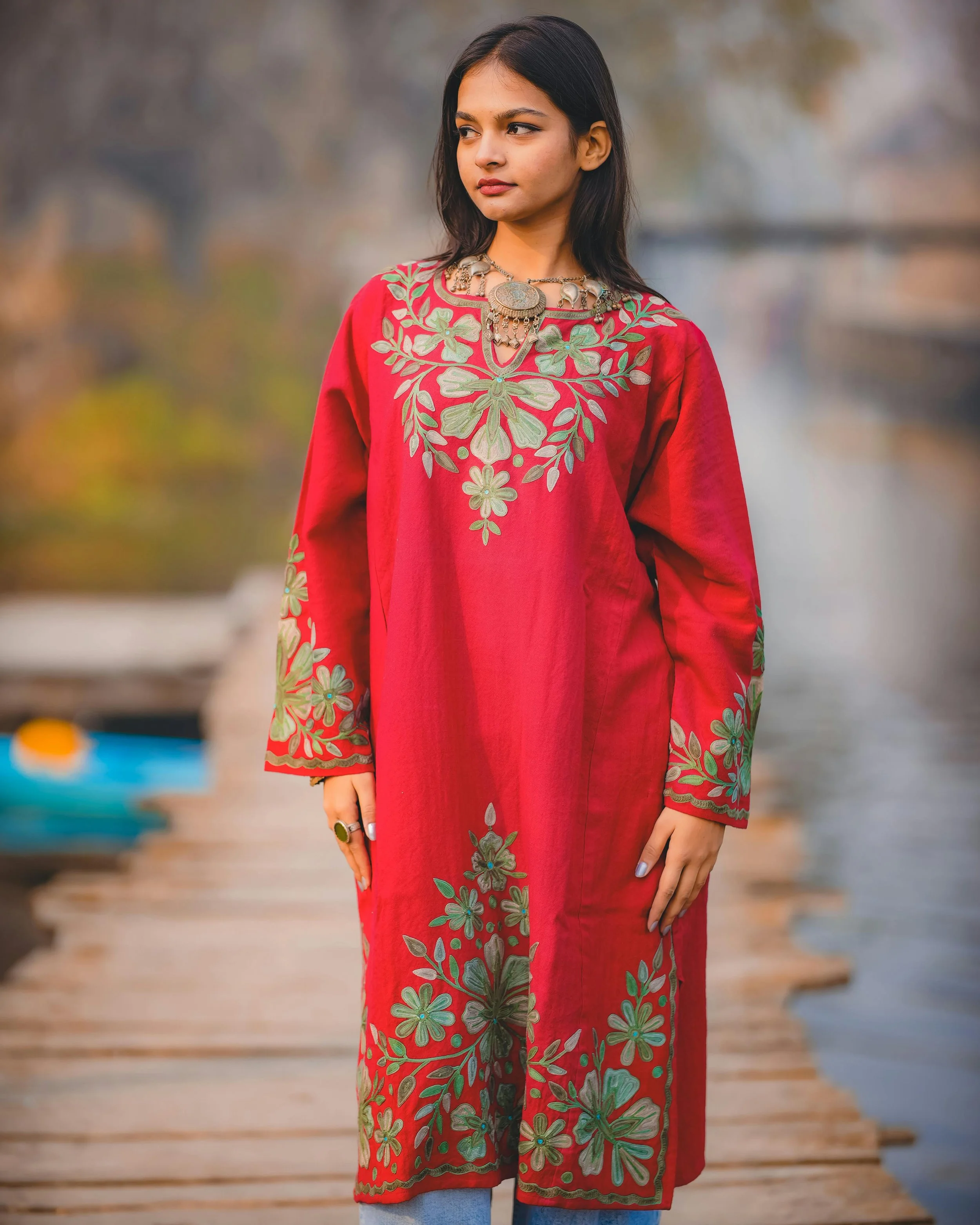
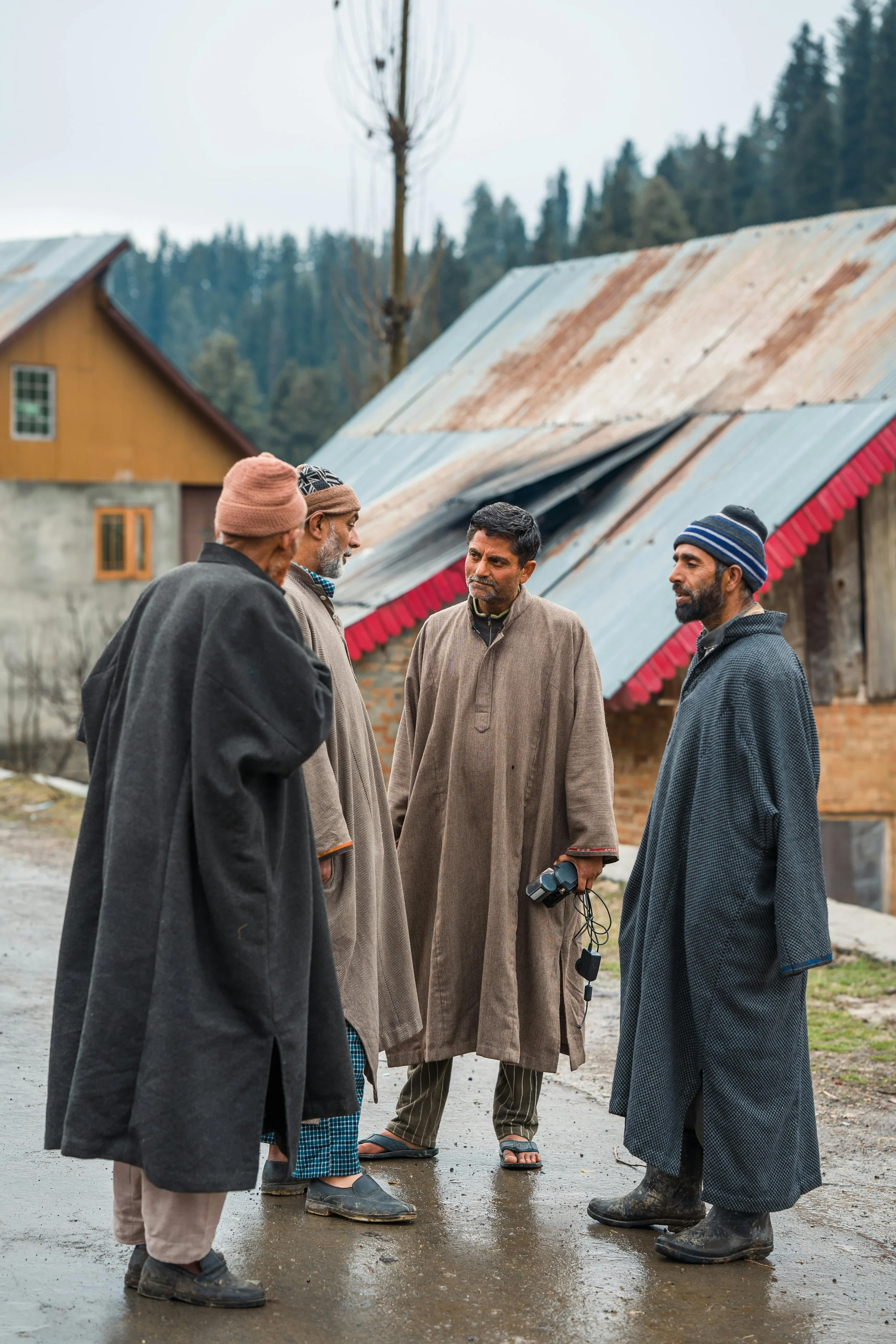
Another beauty of the pheran is its versatility. In the past, the old-style pherans were plain but adorned with delicate hand embroidery. Today, designers also experiment with modern cuts and fabrics, giving the pheran a fresh look while keeping its traditional roots. Whether worn casually or for special occasions, the pheran connects people to their heritage.
If you ever get a chance to visit Kashmir, don’t miss the opportunity to see the pheran up close. It is more than just a traditional garment—it is a story woven into every thread. By learning about the pheran, we keep the beauty of Kashmiri culture alive for future generations.
